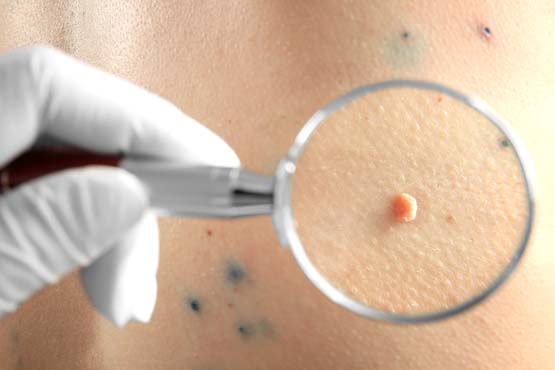
Genital warts usually develop 3 to 4 months after the transmission of HPV to the body. The incubation time of HPV ranges from 2 weeks to 2 years. After its incubation period, HPV manifests itself with warts that develop around the vagina in women, and on and around the penis in men.
Since HPV is transmitted through traumatized skin, genital warts tend to develop mostly in areas of skin exposed to friction during intercourse. This region is the tissue between the vaginal opening and anus in women, and the glans of penis, foreskin, and penis root in men.
Genital warts may also appear on mucosal surfaces (such as the vagina and its surrounding tissues, inside the penile urinary tract) as glove-shaped warts in colors similar to the color of the surrounding tissue. In some cases, warts may spread to the surrounding tissue by developing slowly in the form of ulcerative and cauliflower-like lesions.
Genital warts are usually painless but itchy, and they bleed when plucked or cut with a razor blade. They may tend to increase both in number and size but sometimes their sizes don’t change for years. Papilloma is another clinical form of HPV in the genital area. They can be white or red under the influence of color pigments in the area. Such slow-growing lesions are usually dark in color and can sometimes have stalk.
The course of genital warts varies depending on the type of the virus and the patient’s immune response to it. High-risk HPV types can cause flat genital warts, or HPV infection without genital warts. In such cases, HPV can stay hidden by settling in the cervical cells, and can cause cervical cancer over the years.
Genital warts can sometimes be confused with molluscum contagiosum. With an HPV DNA test, it is easy to determine whether a lesion is a genital wart.
After the diagnosis of genital warts, it is necessary to start the treatment stage without delay. Many methods are available in the treatment of genital warts. The common feature of these methods is to destroy warts. Destructing the warts as well as the basal membrane adequately should be our first priority. During the destruction, healing should be achieved without leaving scars on the skin, and without causing much pain to the patient. The laser treatment is the option that meets all these conditions. Genital wart treatment with fractional carbon dioxide laser is the most effective treatment option with its proven efficacy and low pain, recurrence, and scarring risks.